2200 W Interstate 20 Ste 100, Arlington, TX 76017

Why Age 7 Is the Magic Number for Your Child’s First Orthodontic Visit

If you’re an Arlington parent juggling school pickups, soccer practice, and trips to Six Flags on the weekend, orthodontics probably isn’t at the top of your to-do list. So when the American Association of Orthodontists (AAO) says every child should see an orthodontist by age 7, it’s fair to wonder: why so early? Their teeth are still falling out. Won’t braces have to wait until they’re a teenager anyway?
Actually, no. And that’s the part most parents don’t hear until it’s too late to catch a problem while it’s still small.
Let’s break down what’s really going on in your child’s mouth at age 7, why the timing matters so much, and what it means for families right here in Arlington looking into early orthodontic treatment in Arlington, TX.
What’s Actually Happening in a 7-Year-Old’s Mouth
At age 7, most kids have a mix of baby teeth and permanent teeth. The first adult molars have usually come in, and the front teeth are starting to show up too. This “mixed dentition” stage gives an orthodontist a rare window: they can see how the jaw is growing, how the bite is lining up, and whether the permanent teeth have enough room to come in straight.
Think of it like a home inspection before you’ve finished building the house. The foundation and framing are visible, so problems can be spotted and corrected before the walls go up. Wait until age 12 or 13, and many of those structural issues are already locked in place.
Why the AAO Picked Age 7 Specifically
The AAO isn’t guessing. Orthodontists have tracked jaw growth and bite development for decades, and age 7 consistently marks the point where certain warning signs become visible without being permanent yet. At this stage, a specialist can identify:
- Crossbites, underbites, or overbites before they worsen
- Crowding that signals not enough space for adult teeth
- Jaws that are growing unevenly, side to side or front to back
- Habits like thumb-sucking or prolonged pacifier use that are shifting tooth position
- Extra, missing, or impacted teeth that an X-ray can reveal early
None of this means your 7-year-old is getting braces next month. In most cases, the answer after that first visit is simply, “Everything looks great, let’s check back in a year or two.” But for the kids who do have an emerging issue, catching it now can mean a shorter, simpler treatment plan later, sometimes avoiding surgery or extractions altogether.
The Real Benefit: Guiding Growth, Not Just Straightening Teeth
Traditional braces move teeth. Early, or “interceptive,” orthodontic care does something different: it guides the growth of the jaw itself while there’s still growth to guide. Palatal expanders, space maintainers, and other early appliances work with a child’s natural development instead of correcting it after the fact.
That’s the real reason families search out early orthodontic treatment in Arlington, TX rather than waiting for a referral from the school dentist. Parents want to give their kids the best shot at a healthy bite, confident smile, and fewer complications down the road, not a rushed fix at 15 when there’s less room to work with.
Why This Matters More in a Growing City Like Arlington
Arlington is one of the fastest-growing communities in North Texas, and that means a lot of young families settling in near neighborhoods like Viridian, Dalworthington Gardens, and South Arlington. With Arlington ISD serving tens of thousands of elementary students, plenty of local parents are navigating the same question every fall: is it time for a dentist, an orthodontist, or both?
The answer is usually both, on different timelines. Your family dentist monitors cavities and hygiene. An orthodontist evaluates alignment and growth. Many Arlington families combine a first orthodontic screening with an annual check-up trip, sometimes timing it around school breaks or a weekend outing to the Arlington Museum of Art or Levitt Pavilion, making the appointment feel like just one more stop on a busy Saturday instead of a big production.
Signs Your Child Might Benefit From an Early Evaluation
You don’t need to wait for a scheduled check-up if you notice any of the following:
- Teeth that look crowded, crooked, or oddly spaced
- Difficulty chewing or biting food
- Mouth breathing or snoring at night
- Jaws that shift or make sounds when opening and closing
- Thumb-sucking or pacifier habits past age 4 or 5
- Baby teeth falling out very early or very late compared to siblings
If any of these sound familiar, it’s worth getting ahead of it rather than waiting for the next school checkup to bring it up.
What Happens at That First Visit
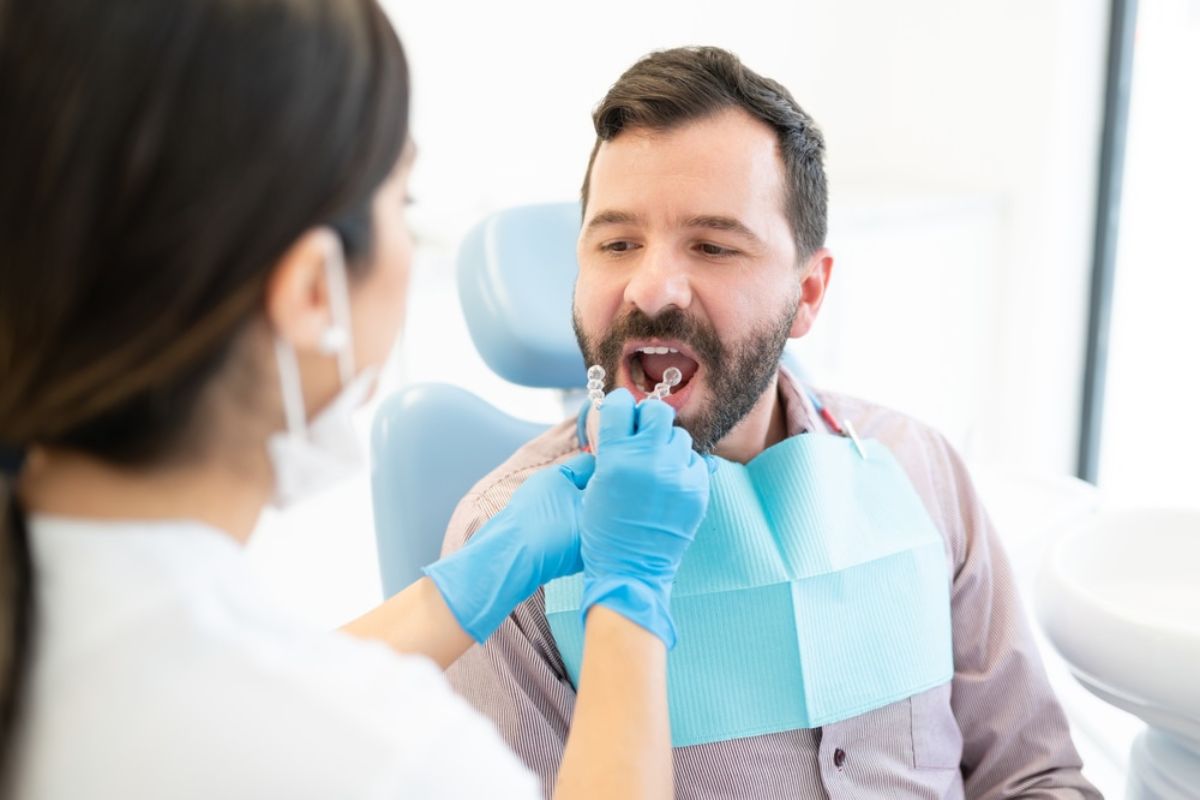
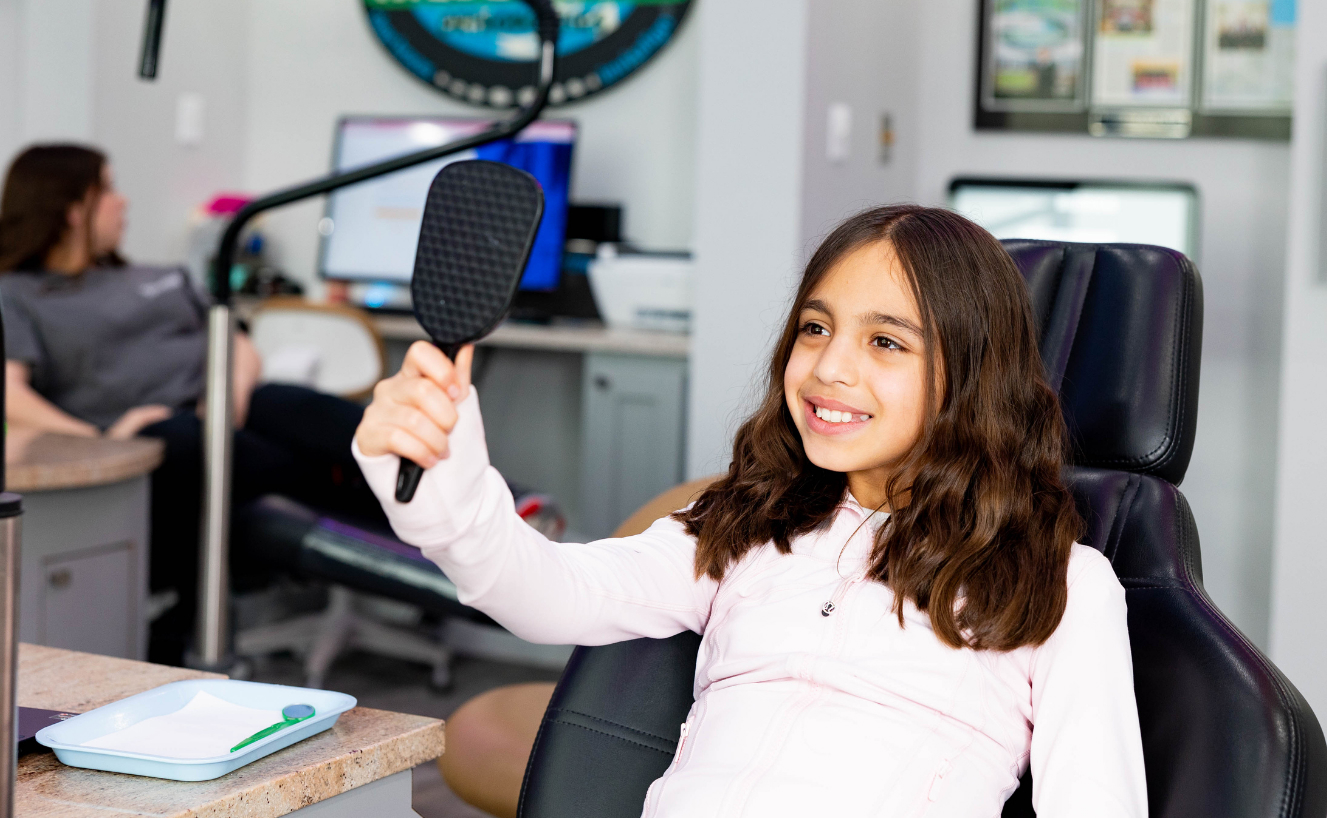
A first orthodontic evaluation is quick, low-pressure, and nothing like a “braces appointment.” Expect a friendly conversation, a visual exam, and usually a digital X-ray to look at how permanent teeth are developing under the gum line. Most first visits wrap up in under 30 minutes, and there’s no cost or obligation attached to finding out where your child stands.
Give Your Child the Best Head Start
An orthodontic check-up at age 7 isn’t about starting treatment early for the sake of it. It’s about having the information you need, while there’s still time to act on it. Whether your child’s smile just needs a second look or there’s a growth pattern worth watching, an early visit gives you clarity instead of guesswork.
If your child is approaching age 7, or has already passed it without an evaluation, there’s no reason to wait for a “perfect” time. Reach out to our Arlington team today to schedule a complimentary first visit, and find out exactly where your child’s smile stands.
Frequently Asked Questions
Does my 7-year-old need braces if we go in for this visit? Almost never right away. Most kids are simply monitored and rechecked in a year or two. Only a smaller percentage need early intervention.
Is an orthodontic screening different from a regular dental check-up? Yes. A pediatric dentist checks for cavities and gum health. An orthodontist evaluates jaw growth, bite alignment, and how permanent teeth are positioned before they’ve fully emerged.
What if we wait until my child is older to get evaluated? Some issues, like crowding or jaw misalignment, become harder and more expensive to correct once the jaw has finished growing. Waiting isn’t dangerous, but it can mean fewer treatment options later.
Is there a cost for the first visit? Most Arlington practices, including ours, offer complimentary first orthodontic evaluations for children, so there’s no financial barrier to finding out where things stand.
My child already sees a dentist. Do we still need this? Yes. Dentists and orthodontists look for different things, and the AAO’s age-7 recommendation exists specifically because early bite and growth issues are often missed in a standard dental visit.